



 Popular Categories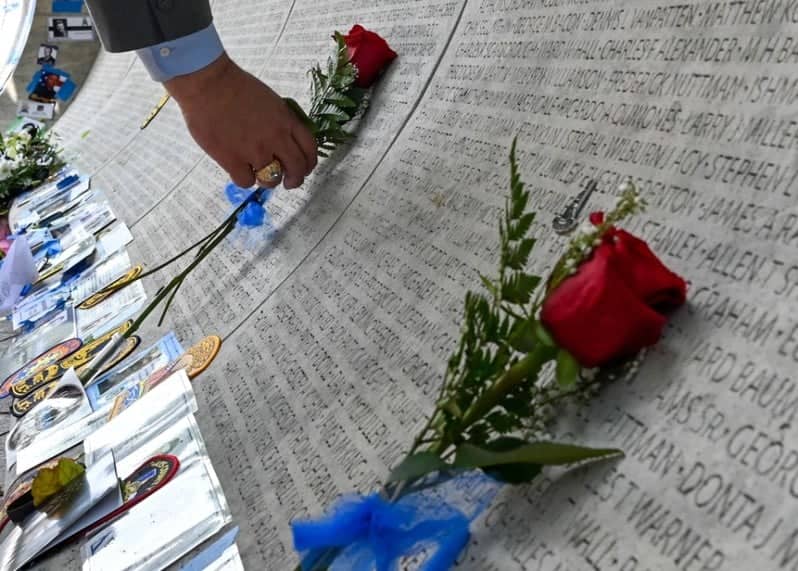
What the Wall Cannot Heal: The Lasting Psychological Impact of Line-of-Duty Deaths

What began as a routine act of courtesy toward a suspect in custody ended in the tragic death of Chief Deputy Jody Cash, a 22-year veteran of Kentucky law enforcement who served with Caldwell County, Calloway County, and the Kentucky State Police. The man who shot him had been in custody. It was May 16, 2022, in the parking lot of the Marshall County Sheriff’s Office in Benton, a few minutes after two in the afternoon. A handgun that the prisoner had was concealed against his body. A cigarette he had asked for, granted in the small kindness that working cops grant a hundred times a year without consequence.
The Weight of Remembrance
Four years have passed since he died—the anniversary falling at the end of National Police Week, when the country sets aside time to read the names of men like him aloud. The week has its purpose, and that purpose is important.
Stoicism, Mortality, and the Reality of the Job
As a practitioner grounded in Stoic philosophy — the discipline of controlling your thoughts, actions, and responses while accepting what cannot be changed — I often return to the writings of Marcus Aurelius, a man who understood loss intimately. He wrote portions of Meditations from a military tent along the Danube during brutal campaigns against the Quadi and Marcomanni tribes. Though he ruled an empire, the exhaustion in his words is unmistakable. What survived the fall of Rome were not abstract philosophical theories, but deeply personal operational reflections from a leader who understood the hard distinction between what could be controlled and what could not.
The single sentence I would put in the hands of every cop, deputy, and trooper this week is one I keep reaching within: “Since it is possible that thou mayest depart from life this very moment, regulate every act and thought accordingly” (Meditations 2.11). He was being precise, not morbid. The line names the only honest stance for anyone who carries a weapon to work, that the duty belt, the body armor, and the trauma kit do not change the underlying mathematics of being mortal. The cop already knows this. He knows it on every traffic stop he has ever walked up on. He knew it the way Jody knew it for twenty-two years. The trouble is not the knowing. The trouble is what we do with the knowing when one of us is killed.
When the Mind Writes the Wrong Sentence
This is where the clinical work begins, and where the philosophical work must follow. When a brother is killed, two things happen at once. The body absorbs the event, and the mind writes a sentence about the event. The body is the easier one to address. The mind is the one that follows you home.
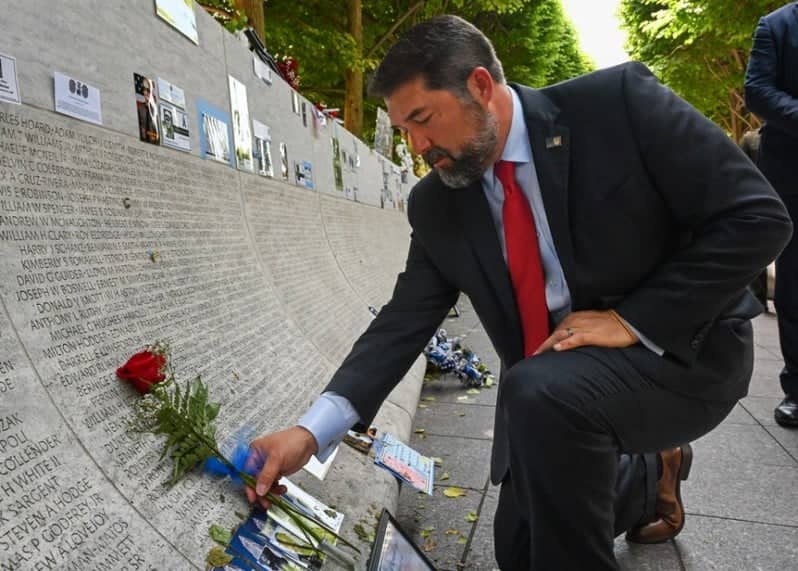
What I see, year after year, in the men and women who reach out after a line-of-duty death from the partners, the peers, those who were not there but heard the call go out, is that the body settles, more or less, with time and with the rituals we have built for that purpose. The funeral. The procession. The folded flag. The week in Washington. The Wall. These regulate. They are the apparatus we have inherited for moving a nervous system back through the autonomic register from rupture to something habitable. They are necessary.
The Beliefs Trauma Installs
The sentence the mind writes does not settle. The sentence the mind writes is the part of the work that no procession will reach. And the sentence is almost always some version of one of these:
It could have been me, and one day it will be.
If I had been there, he would still be alive.
The world is more dangerous than I can bear.
I am not allowed to be all right while he is in the ground.
Vigilance is the only thing keeping the people I love alive, and vigilance is failing.
Each of these sentences feels, to the man inside it, like a fact. Each of them is a belief. The difference matters more than almost any other distinction in the helping professions, because the body cannot tell the difference, and so the body responds to the belief as if it were the event itself.
The Citation Challenge
This is the territory Dr. Albert Ellis named in 1955, when he proposed that what disturbs us is not events themselves but the demands we attach to them. Ellis was a master clinician, and I’m honored to be an Associate Fellow of his prestigious institute. He was also a Stoic without naming himself one, because the architecture he was describing had been described, in operational terms, more than 1,800 years before him by Epictetus, Marcus, and Seneca.
The Stoic move is not a denial of the event. It is an interrogation of the belief.
In my clinical practice, I call this the Citation Challenge, because the language of philosophy does not always reach a working cop like the language of court does. Where is your evidence? Who told you that? Would it hold up in front of a judge? When the sentence in the mind is that if I had been there, he would still be alive, the Citation Challenge asks for the proof. Were you assigned to that detail? Did you know the prisoner had concealed a weapon? Did you have authority over the search? When the answers come back honestly, the sentence shows itself for what it is, a belief installed in the wake of a catastrophe, not a finding that the evidence supports.
Consolation is what we say at the memorial. The Citation Challenge is the work done months later, alone, when the sentence has had time to become a tenant. The line between the man who carries the loss and the man the loss carries is almost always drawn here, and the men I see who cross it cross it because someone helped them write a different sentence under the same event.
When Grief Becomes a Lifestyle
The cost of leaving the sentence undisputed is not academic. It is the marriage that erodes in the years after, because the man has decided, at a level beneath language, that the world is not safe and therefore he is not allowed to be soft inside his own house. It is the drinking, which is the body’s attempt to lower an alarm the mind keeps tripping. It is the second career inside the first one, the way some men start to perform vigilance instead of practicing it, because the loss has taught them that any moment of rest is the moment the next call goes bad. None of this is the loss. All of it is the sentence written on top of the loss.
Marcus would have recognized it. He lost a co-emperor and most of his children. He buried friends he had known since boyhood. He understood that the work was not to feel less. The work was to refuse to let the events of the day rewrite the philosophical conclusion he had reached about how to live. In his vocabulary, the work was prohairesis — the faculty of choosing what we make of what happens, which is the only faculty fully ours.
What the Wall Can — and Cannot — Do
The Wall in Washington holds the name. It does this well. There is a reason the men I know and I will return year after year. The granite is the country’s act of refusing to let the names dissolve, and that refusal is itself a clinical good, because it tells the nervous system that the death has been seen and recorded by an entity larger than the family, the agency, or the man’s own memory.

What the Wall cannot do is dispute the belief. The Wall is not built for that. The Wall is built for the body. The work for the mind is private, slower, and almost always begins after the bus pulls out of D.C. and the man is back in his patrol car alone with the sentence he has been carrying for however long.
The Work of Healing
So this is the work, four years on from the parking lot in Marshall County, on the Monday after the Saturday that closed the week and closed the year both at once. The work is to hold Jody’s name without ratifying the philosophical conclusion that the event tried to instill in any of us. To grieve him without converting the grief into a verdict about the world. To carry the dead without letting the carrying become the cage.
This requires three things, in this order:
1. Address the Body
The rituals exist for a reason, and they are not optional.
2. Name the Sentence
Most men I see have never said the actual sentence out loud, and the saying of it is half the work.
3. Dispute the Belief
Where is the evidence? Who told you that? Would it hold up in court?
Remembering Jody Cash
Jody was an amazing cop. He was a great public information officer to the reporters in his county. He had a family. Most people did not know he was finishing a master's in clinical mental health counseling, so he could come back and help cops with what they carry home. He was a personal friend of mine, and I was his last professor. He was the kind of man other cops sent their press releases through because they trusted him to handle the words. His name is on the granite in Washington now, and on a training building in Richmond, and at roll call in his department for as long as that department exists. The country’s apparatus has done what it can.
The Rest Is Ours
The rest is interior. The rest is whatever sentence each of us is writing under the event of his death, and whether that sentence is one we have actually examined or one we have inherited from the panic of the day we heard the news. Marcus would not tell us to feel less about him. Marcus would tell us to be careful what we conclude about the world on the strength of what was done to him.

I could not go to Washington this year. I read his name myself, on a Saturday, four years to the day, in a quiet room. I disputed the sentence that has tried to install itself in me a few times since 2022, and I will dispute it again. That is the work. The work is one man at a desk, four years on, refusing to let a single bad day in May rewrite the philosophical conclusion he has reached about how to live.
Related Posts






Disclaimer: The information in this blog post is for general informational purposes only and should not be taken as legal, regulatory, safety, or professional advice. Galls, LLC and its affiliates (collectively, the “Company”) distribute public safety and law enforcement products but do not manufacture the items discussed. All product details are based on manufacturer-provided information and have not been independently verified by Galls. We make no warranties regarding the accuracy or completeness of such information. Readers should consult the respective manufacturer or regulatory authority for the latest details.
For more detailed information, visit our Disclaimer Page.
 Item Added to Cart!
